top of page


Brighton Grand Hotel 1984
Me and Ann
Billy
Althea
Mom Dad
Ted
Skyscrapers
1980's US at Night
Coloured Photos

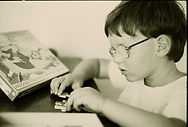


Photography is so common to our media-materialist culture that to imagine a spiritual aspect to it feels impossible. However for me it exists in defining what the machine versus the man can achieve with it. There is always a struggle for dominance where either the mechanics of the camera itself is foremost or whether the artist is. Spirituality can only exist when the latter occurs. For me only within analogue is this possible.
In the early 1980's I lived first in Boston then moved to Sussex, England and it was at this time that I was a photographer.
Although I made hundreds of rolls I found that in the darkroom it was extremely difficult to develop the low light compositions that I was interested in because to do so meant having an expensive array of different coloured papers and contrast grades in order to get the correct print. A common problem with low light exposures. When it worked it was great but I could not keep up with what I was shooting and gave up printing.
Many years later digital came along and I realised it was not suited to me because I need to be hands on the controls using an old fashioned viewfinder and dial based system. In any case the pictures looked strange and hollow to me. However digital offered something else.
I bought a box negative scanner that could capture the collection that I still had kept in fairly good condition without touching them to glass like a slide projector. With it came a software app which controls the film type, contrast and exposure as if you are actually printing in the darkroom. So for the first time I could get the pictures out from the negatives in a form that resembled the original vision that was shot. Photo editors make even more improvements.
This is for me the best combination, where the analogue is used for the composition but the digital for the printing process.
In old film the problem was about colour because the industrial palette was set in stone and impossible to control in the darkroom. Hence the flourishing of black and white. The camera itself was well designed to allow quick and instinctive composition. The three dimensions of light , shutterspeed and depth of field gave an excellent range of possibilities to aim and create focus quickly in different situations.
The artist was the master over the machine when he understood how to work it. The result was art that could speak about what the artist was experiencing, the mental image, and memory rather than the pretence of fact finding. The only hindrance to spiritual introspection was the absence of individualised colour.
So my photography lives in this space. It is defined by natural and often low light, soft focussing with a well aimed but narrow depth of field which attempts often to recreate the way we actually see in order to make an image that resemblies those we store in our inner memory. So feelings and meanings can be more strongly associated with it. And also of course to get focus in low light at all costs using the tripod and pushing the asa up on the film as it is developed. Never using additional out of context lighting.
The subject matter is also to humanise the city environment I live in and to capture people in a relaxed candid, honest unposed way. Trying also to see a beauty in cityscapes not obvious at first glance.
My only foray into documentative photography was the miners march and Grand Hotel bomb in Brighton, 1984. The march and the terror were in the same place so I made a history of it. I was an unemployed young man so felt a personal involvement with the situation.
I hope it reachs some people out there. Paul Greenan
bottom of page